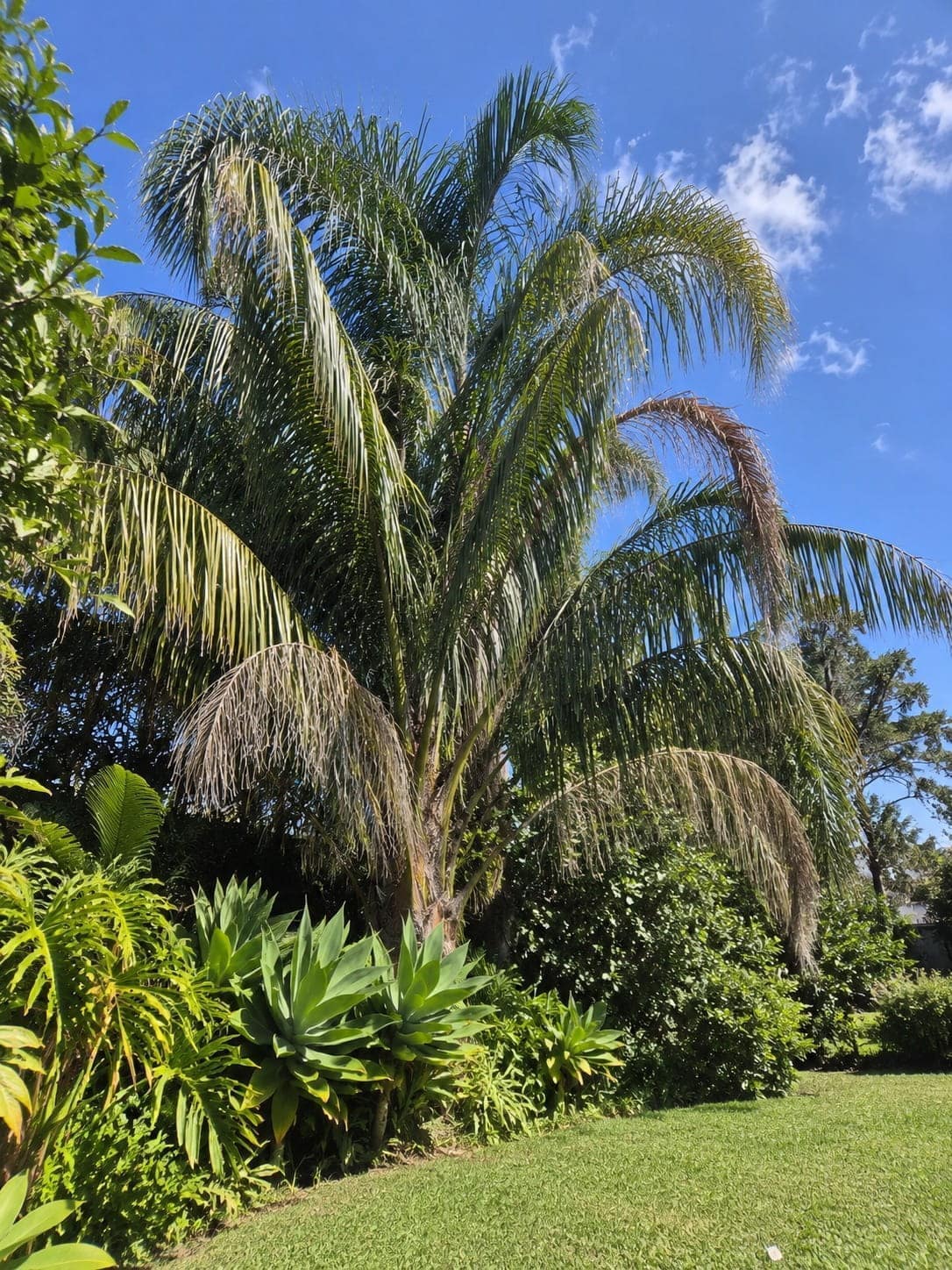
Auckland Cocos Palm & Queen Palm Removal
Removal for Syagrus romanzoffiana — fast-growing and low-maintenance until it isn’t, with frequent seed drop that often brings removal forward sooner than owners expect.
Cocos Palm Removal in Auckland
Cocos Palm removal in Auckland is often driven by how quickly this species grows, and how much mess it can create once it settles in. Also known as the Queen Palm, Syagrus romanzoffiana is fast-growing and low-maintenance in its early years, but heavy seed drop and prolific self-seeding tend to bring it to owners’ attention sooner than expected. We assess growth, seed load and root stability before recommending trimming or full removal, and clear every trace of seed and frond material from site once the job is done.
- Fast growth compared to most other species
- Heavy, frequent seed bunches
- Prolific self-seeding across garden beds
- Shallow, wide-spreading root system
- Common in 1980s–2000s Auckland subdivisions
- Sometimes flagged near native bush reserves
- Same-week booking available in most areas
Get a Free Estimate
Tell us the height and how close it sits to the house — most palms can be quoted from a photo.
What Is a Cocos Palm?
Cocos and Queen Palms grow quickly and settle in easily, which is exactly why they tend to outgrow their welcome faster than slower species. Fast-growing and low-maintenance until it isn’t, with frequent seed drop that often brings removal forward sooner than owners expect.
Heavy seed bunches self-seed readily across garden beds and lawns, and shallow roots can affect stability in wet or windy conditions. Where the palm is otherwise healthy, trimming the seed heads is often enough — we’ll tell you which applies.
What Makes This Species a Recurring Job
Cocos and Queen Palms grow quickly and settle in easily, which is exactly why they tend to outgrow their welcome faster than slower species.
Constant self-seeding
Heavy seed drop germinates readily, leading to unwanted seedlings across garden beds and lawns nearby.
Outpaces its space quickly
Reaches significant height in a fraction of the time of slower species, often surprising owners.
Shallow, wide root spread
Roots stay close to the surface, which can affect stability in wet or windy Auckland conditions.
Heavy seed bunches
Large hanging seed clusters add real weight to the crown and can drop with little warning.
Found in older subdivisions
Widely planted through the 1980s–2000s as a fast, tropical-looking option for new sections.
Flagged as a weed in some areas
Prolific seeding has led some councils and conservation groups to flag it as a concern near native bush.
When Is Auckland Cocos Palm Cutting Appropriate?
Cocos Palms grow quickly, but cutting isn’t usually needed unless a specimen has been left unmanaged for many years. Once height passes what a standard lift or ladder can safely reach, or the palm sits close to a fence, power line or neighbouring structure, sectioned removal becomes the safer route. Younger, more typical Cocos Palms are usually handled through standard removal instead.
- Height exceeding safe ladder or lift reach
- Long-neglected specimen grown unusually tall
- Close proximity to power lines or structures
- Narrow access preventing a full-length drop
- Heavy seed bunches adding uneven crown weight
- Shallow root plate raising stability concerns
- Located near a boundary or neighbouring property
Cocos Palm Stump Removal in Auckland
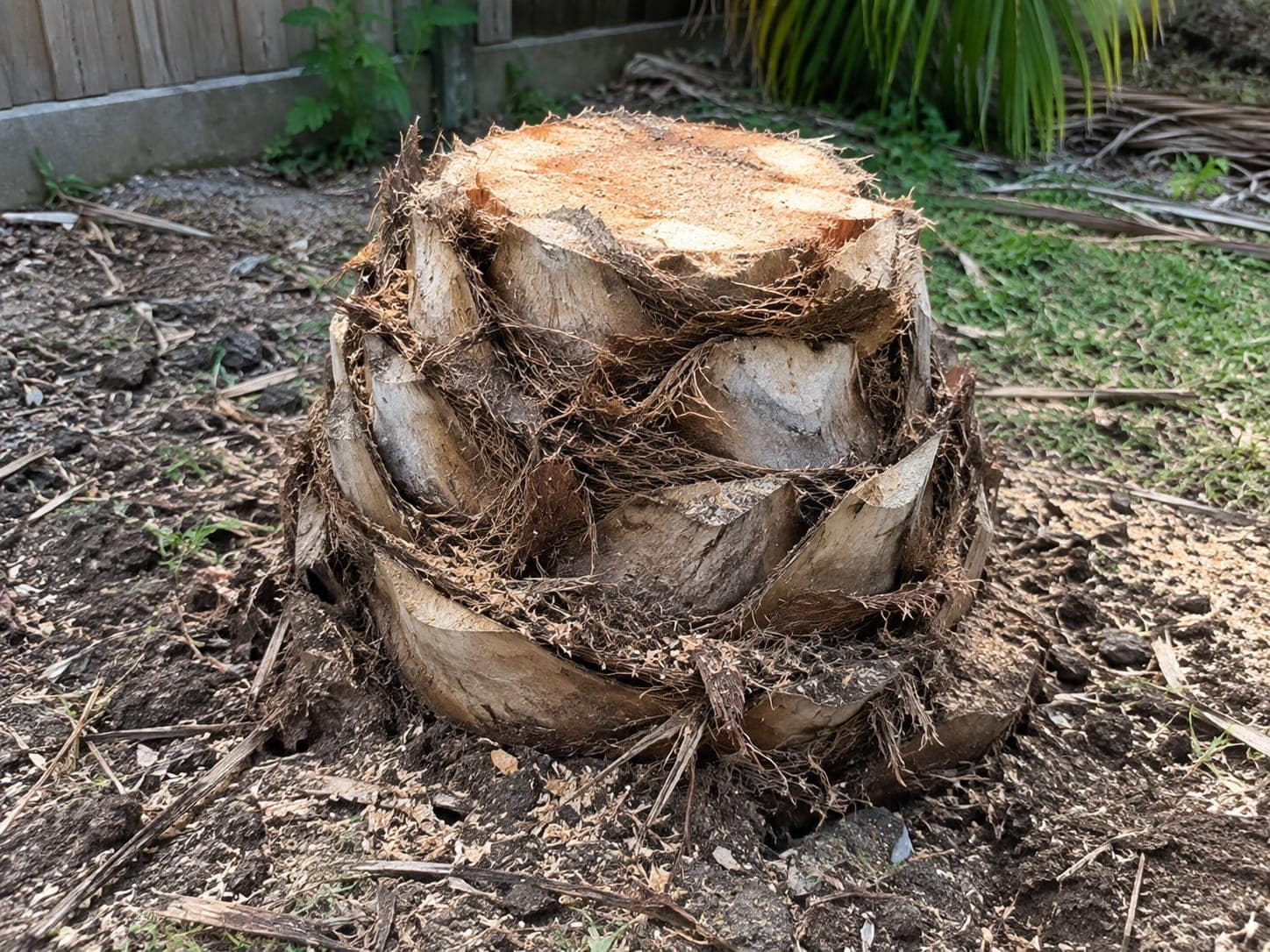
Cocos Palm stumps are frequently left behind after a rushed removal, particularly where the palm was taken out due to safety concerns rather than a planned landscaping project. Left in the ground, the stump can continue sending up suckers or seedlings nearby, adding to the self-seeding problem this species is already known for. Some owners leave it simply because they weren’t aware grinding is a separate service. Removing the stump stops regrowth in its tracks, clears the area for replanting, and finishes the job properly rather than trading one palm problem for a smaller, ongoing one.
Safe Cocos Palm Removal in Auckland
- 01
Assess growth & seeding
We check height, seed load and root stability before recommending trimming or full removal.
- 02
Confirm the right approach
Healthy palms with a manageable seed problem can often be trimmed rather than removed outright.
- 03
Sectioned removal if needed
Where removal is the better call, the palm comes down in controlled sections.
- 04
Full site cleanup
All fronds, seed material and trunk waste are cleared from site the same day.
Which option fits?
How Much Does Cocos Palm Removal Cost in Auckland?
Fast growth means these are often removed at a smaller size than other species, keeping most jobs in the standard range.
Frequently Asked Questions
Why does it seed so much?
Birds and wind spread the seed widely, and it germinates readily in Auckland’s climate, which is why self-seeded clusters are so common.
Is it actually classified as a weed?
It’s flagged as a concern in some areas due to its spread near native bush, though it isn’t formally controlled everywhere in Auckland — worth checking locally if you’re near reserve land.
Can trimming reduce the seeding issue?
Yes — removing seed heads before they mature and drop is a practical way to manage the problem without full removal.
Does it need council consent to remove?
No, it isn’t a protected or native species, so consent generally isn’t required.