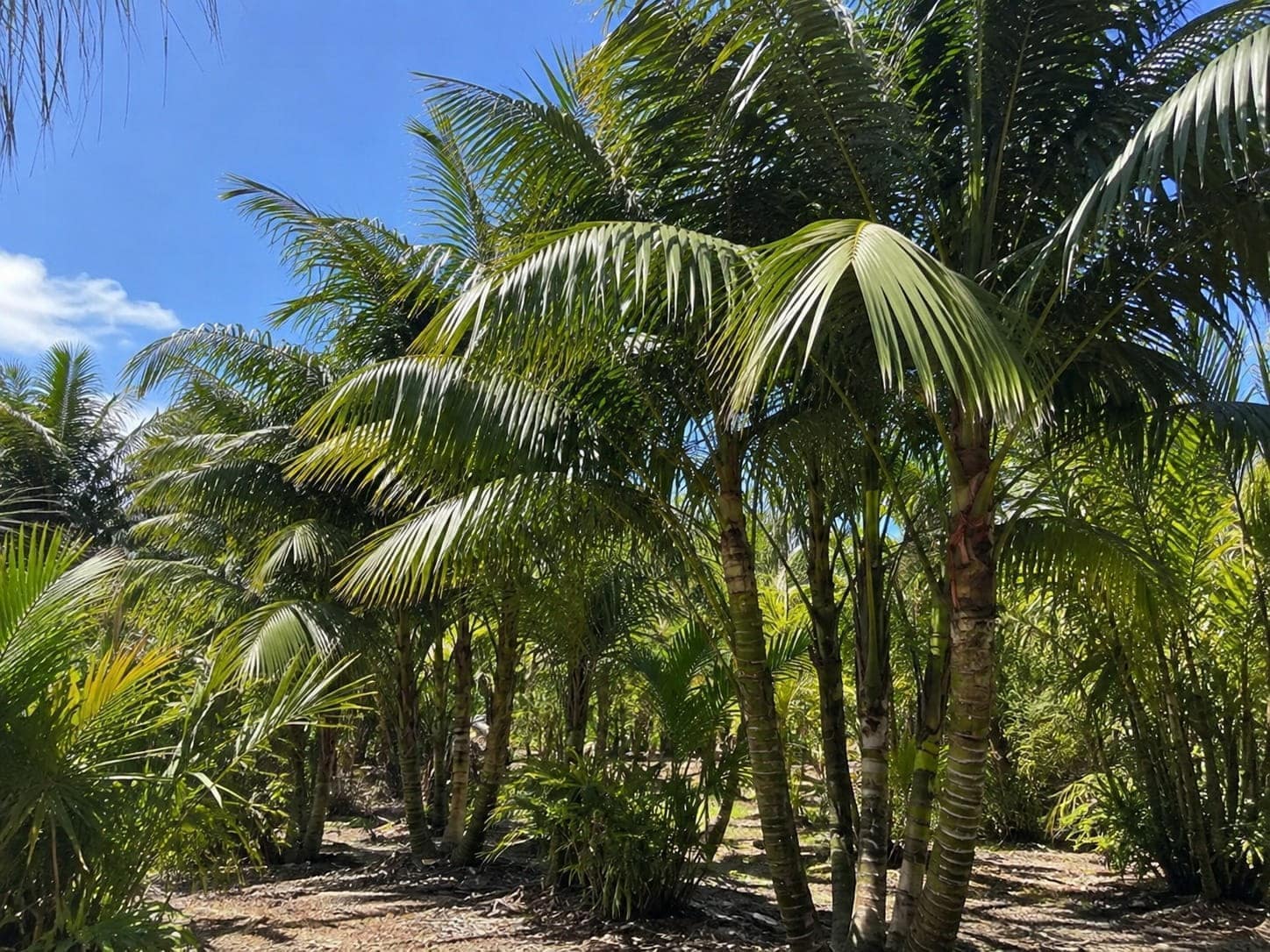
Auckland Kentia Palm Removal
Removal for Howea forsteriana — a slower-growing, more delicate palm species, usually needed due to disease or damage rather than simply outgrowing its spot.
Kentia Palm Removal in Auckland
Kentia palm removal in Auckland is a less common request than for faster-growing species, since Howea forsteriana rarely outgrows its spot. Most requests come down to disease, cold damage or wind exposure rather than size, particularly for specimens planted in sheltered courtyards. Given how slowly this species grows back, we always assess whether a stressed Kentia can recover before recommending removal, rather than defaulting straight to taking it out.
- Rarely outgrows its planting spot
- Removal usually disease or damage driven
- Very slow, steady growing species
- Sensitive to cold and wind exposure
- Common in sheltered courtyard settings
- Higher-value given its slow growth
- Multi-trunk clumps quoted as one job
Get a Free Estimate
Tell us the height and how close it sits to the house — most palms can be quoted from a photo.
What Is a Kentia Palm?
Kentia Palms are more commonly found indoors or in sheltered courtyards than in open Auckland gardens, and removal is rarely about size. It’s a slower-growing, more delicate species, usually needed due to disease or damage rather than simply outgrowing its spot.
Because a mature outdoor specimen represents significant time invested, it’s worth confirming a health issue is genuinely unrecoverable before committing to removal. Where a palm may still recover, we’ll say so.
What Usually Brings This Species to Removal
Kentia Palms are more commonly found indoors or in sheltered courtyards than in open Auckland gardens, and removal is rarely about size.
Removal is usually health-related
Unlike faster species, Kentia rarely outgrows its spot, so removal is more often about disease or damage.
Very slow, steady grower
A mature outdoor specimen represents significant time invested, worth a second opinion before removal.
Usually in sheltered courtyards
Most outdoor Kentias in Auckland are planted in wind-protected, part-shaded positions.
Sensitive to cold and wind
Unlike hardier species, exposure damage is a common reason for decline once planted outdoors.
Often a higher-value specimen
Given the slower growth rate, it’s worth confirming a health issue is unrecoverable before committing to removal.
More common indoors than outside
Most Auckland removals involve specimens originally planted in sheltered courtyard positions.
When Is Auckland Kentia Palm Cutting Appropriate?
Cutting is rarely needed for Kentia Palms, since this species grows slowly and seldom reaches a height requiring sectioned removal. It becomes relevant mainly for older, multi-trunk clumps that have grown taller than expected in a sheltered courtyard, or where nearby structures leave no room for a standard drop.
- Multi-trunk clump grown taller than expected
- Sheltered courtyard with limited drop space
- Nearby walls, roofing or glazing at risk
- Confirmed disease affecting structural stability
- Narrow side access preventing standard removal
- Height exceeding safe ladder reach
- Located close to a boundary or neighbour
Kentia Palm Stump Removal in Auckland
Kentia Palm stumps are less commonly left behind, mostly because removal itself is rarer for this slow-growing species, but it does happen after disease or storm damage in a sheltered courtyard. A leftover stump in a small, considered courtyard space tends to stand out more than it would in an open garden, given how deliberately these areas are usually designed. Some owners leave it while deciding on a replacement planting. Grinding it out restores the courtyard’s clean look and clears root material properly, which matters more here given how compact and visible these planting spots usually are.
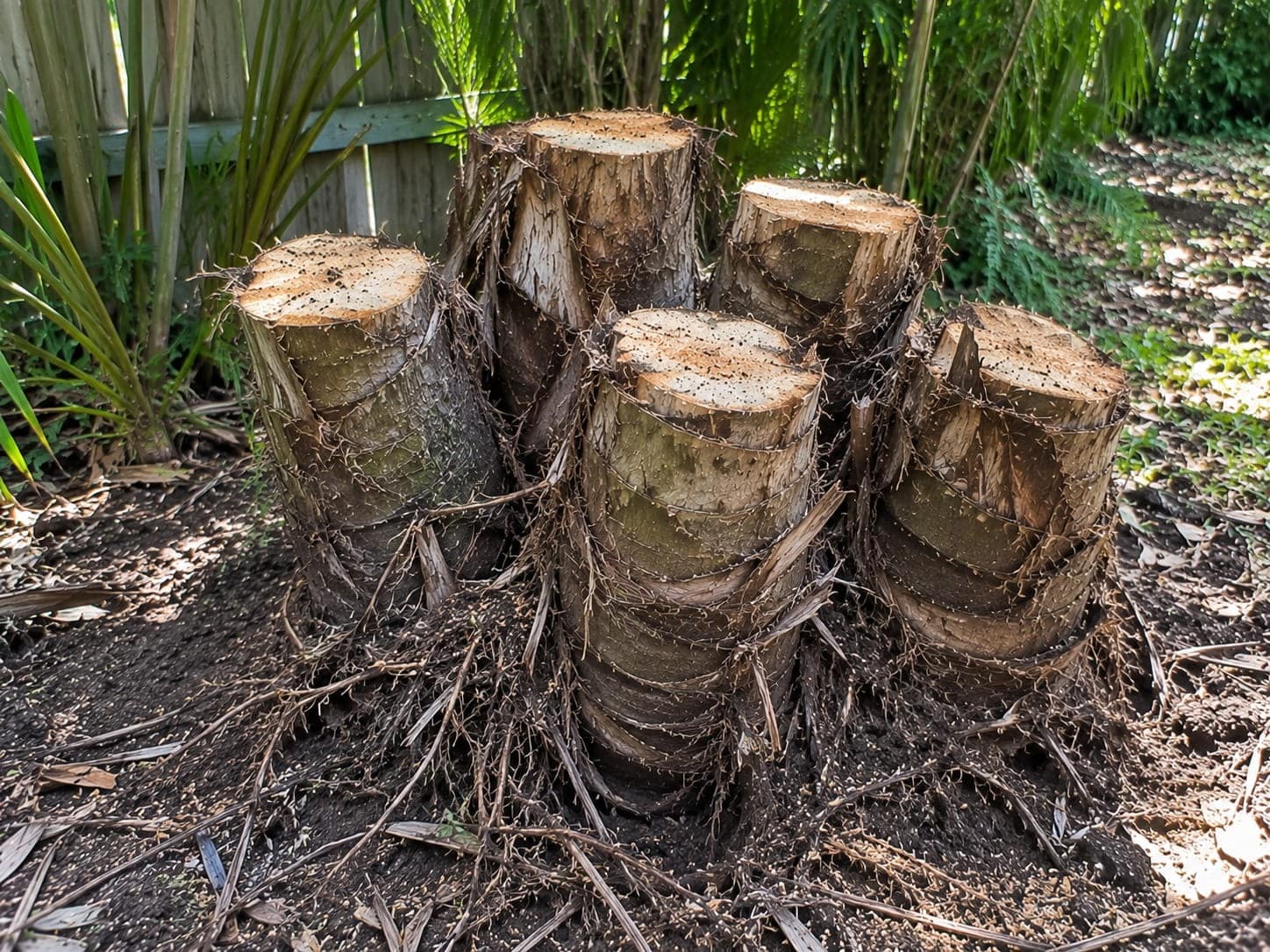
Safe Kentia Palm Removal in Auckland
- 01
Health & condition assessment
We check for disease, cold damage or wind stress before recommending any course of action.
- 02
Confirm the right approach
Where a palm may still recover, we’ll say so rather than default to removal.
- 03
Sectioned removal if needed
Where removal is the better call, the palm is taken down in controlled sections.
- 04
Full site cleanup
All fronds, trunk and clump material are cleared from site the same day.
Which option fits?
How Much Does Kentia Palm Removal Cost in Auckland?
Slow growth keeps most specimens compact, generally keeping this toward the lower to mid end of our range.
Frequently Asked Questions
Why would a Kentia need removal if it’s slow-growing?
Usually disease, cold damage, or wind exposure rather than size — this species rarely becomes a space problem.
Can a stressed Kentia be saved instead of removed?
Sometimes — it’s worth an assessment before committing to removal, given how slowly this species grows back.
Is it a protected species?
No, it’s not native or commonly scheduled under Auckland Council rules.
Do you remove clustered or multi-trunk Kentias?
Yes, these are quoted based on the full clump rather than per individual trunk.