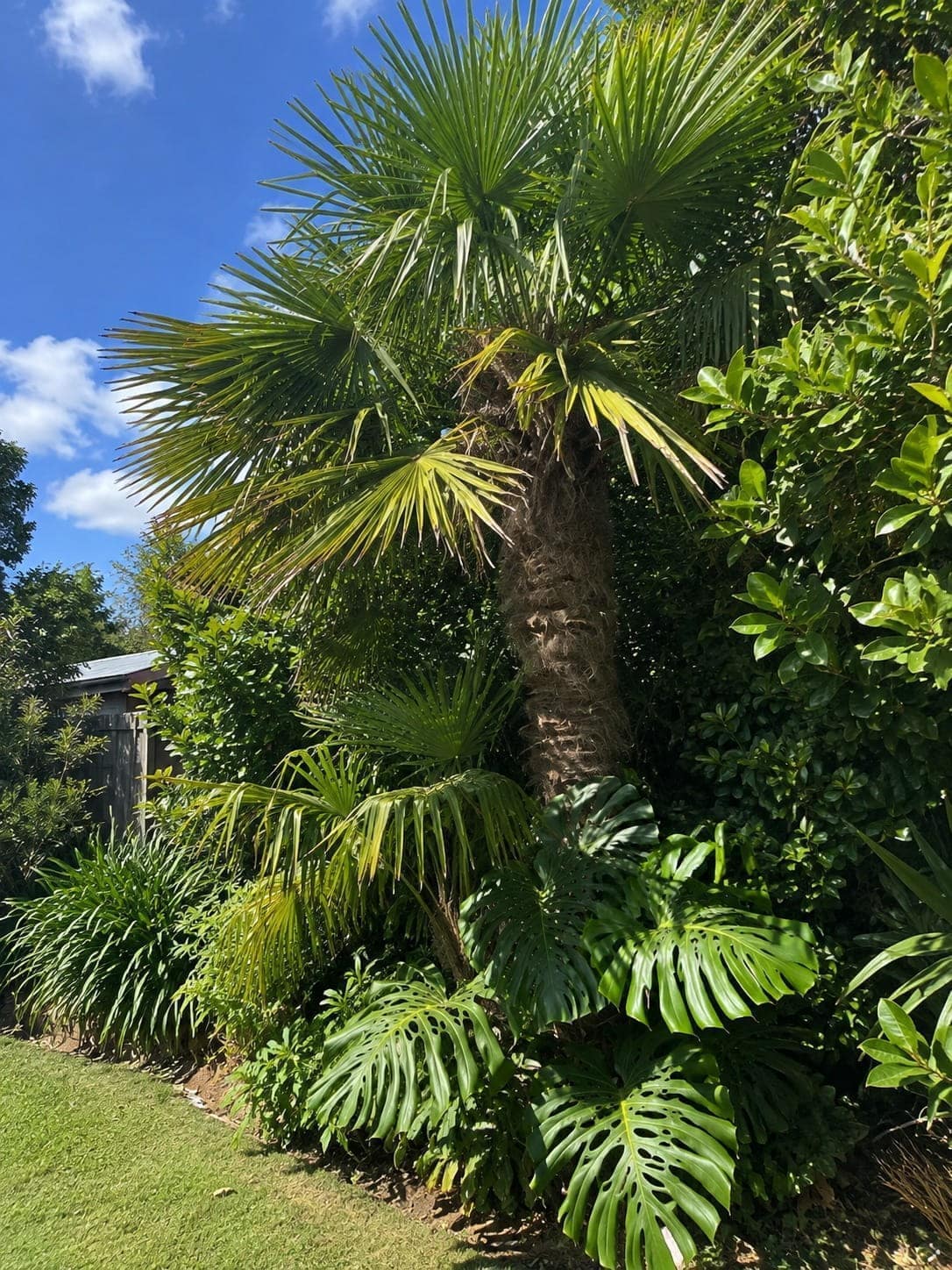
Auckland Chinese Windmill Palm Removal
Removal and trimming for Trachycarpus fortunei — one of Auckland’s hardiest palms, but prone to a buildup of dead fibrous material that needs regular clearing.
Chinese Windmill Palm Removal in Auckland
Chinese Windmill Palm removal in Auckland tends to come up less often than for faster-growing species, simply because Trachycarpus fortunei is one of the hardiest palms in the region. It tolerates cooler, shadier spots better than most, which is exactly why it’s often left unmanaged until fibrous buildup along the trunk becomes obvious, or occasionally a fire risk. We clear fibre and dead fronds where the palm is healthy, or remove it entirely where age or condition calls for it.
- Dense fibrous covering along the trunk
- Dry fibre can become a fire hazard
- Slow, steady growth over decades
- Thrives in shaded, cooler garden spots
- Fan-shaped fronds that drop unevenly
- Rarely reaches height needing cutting service
- Not typically a protected species
Get a Free Estimate
Tell us the height and how close it sits to the house — most palms can be quoted from a photo.
What Is a Chinese Windmill Palm?
Windmill Palms tolerate Auckland’s cooler, shadier spots better than most, which is exactly why they’re often left unmanaged until buildup becomes obvious. One of Auckland’s hardiest palms, but prone to a buildup of dead fibrous material that needs regular clearing.
That accumulated fibre dries out over summer and can become a genuine hazard where it sits close to a fence, deck or the house. Often a clearing visit is all that’s needed rather than full removal.
What Makes This Species Low-Risk but High-Maintenance
Windmill Palms tolerate Auckland’s cooler, shadier spots better than most, which is exactly why they’re often left unmanaged until buildup becomes obvious.
Dense fibrous trunk covering
Dead frond bases and fibre build up along the trunk over years, holding moisture and debris against the stem.
Dry fibre can be a hazard
Accumulated dead material dries out over summer and can catch quickly if it sits close to structures.
Grows steadily for decades
A slower growth habit means many were planted 20–40 years ago and are only now reaching a size needing attention.
Thrives in shaded, cooler spots
Persists in gardens where other palms wouldn’t, often as an older, established planting.
Fan-shaped fronds drop unevenly
Dead fronds can hang on for a season or more before finally releasing on their own.
Mistaken for low-maintenance
Hardiness leads many owners to skip upkeep entirely until buildup or lean becomes noticeable.
When Is Auckland Windmill Palm Cutting Appropriate?
Windmill Palms rarely require cutting, given their naturally slower growth and typically modest mature height in Auckland gardens. It becomes appropriate mainly for older, well-established specimens that have quietly reached a genuinely tall size over several decades, or where fibrous trunk buildup has made the palm heavier and less predictable to fell as a whole.
- Decades-old specimen reaching unusual height
- Dense fibrous buildup adding trunk weight
- Located close to a house, deck or fence
- Narrow garden access preventing a standard drop
- Overhead wires or structures nearby
- Trunk showing signs of lean or instability
- Multiple windmill palms clustered together
Chinese Windmill Palm Stump Removal in Auckland
Windmill Palm stumps are sometimes left because the trunk itself looks solid and unobtrusive compared to other species, leading owners to assume it isn’t worth the extra cost. But the fibrous root base can hold moisture and encourage fungal growth nearby, and a stump sitting in a garden bed or lawn edge is still an awkward obstacle for mowing or future planting. This is especially common where the palm was removed as part of a broader garden tidy-up. Grinding it out below ground level finishes the job cleanly and avoids leaving a lingering reminder in an otherwise refreshed garden space.
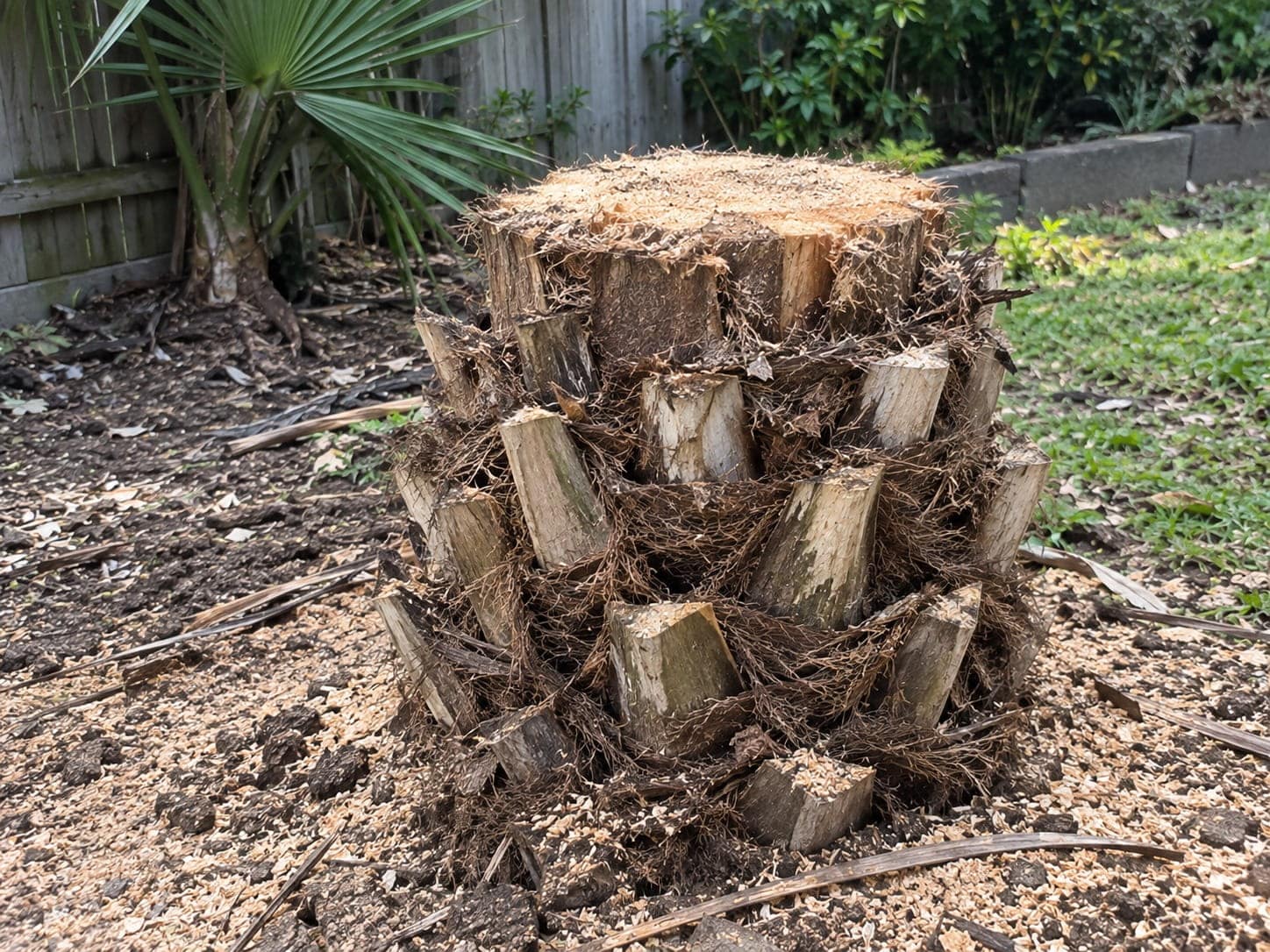
Safe Chinese Windmill Palm Removal in Auckland
- 01
Assess fibre buildup & condition
We check trunk fibre density, frond condition and any lean before recommending a trim or full removal.
- 02
Clear fibre & dead fronds
Where the palm is healthy, fibre and dead material are cleared back to a tidy trunk.
- 03
Sectioned removal if needed
Where removal is the better call, the trunk comes down in controlled sections.
- 04
Full site cleanup
All fibre, frond and trunk material is cleared from site the same day.
Which option fits?
How Much Does Windmill Palm Removal Cost in Auckland?
Slower growth keeps most specimens shorter than other species, generally keeping this toward the lower end of our range.
Frequently Asked Questions
Is the fibrous trunk actually a fire risk?
Yes, if left to build up over years, especially in a spot close to fences, decks or the house itself.
How tall do these get in Auckland?
Typically slower and shorter than tropical species, with most Auckland specimens sitting under 6–8m even at maturity.
Does it need council consent to remove?
Not typically — it isn’t a native or commonly scheduled species.
Can I just have the fibre cleaned off instead?
Yes, this is a common lighter-touch option and part of a standard trimming visit.